
The Alan Parsons Project were one of the greatest musical projects in the history of progressive rock, rock, and, I dare say, music in general. The duo consisted of multi-instrumentalist sound engineer Alan Parsons (who previously worked with Pink Floyd on their well-known iconic The Dark Side of the Moon concept studio album released in 1973) and keyboardist Eric Woolfson. The two British musicians created fascinating and catchy music together, their overall sound blending progressive rock, art rock, soft rock, progressive pop, and soft rock. They performed together from 1975 and 1990.
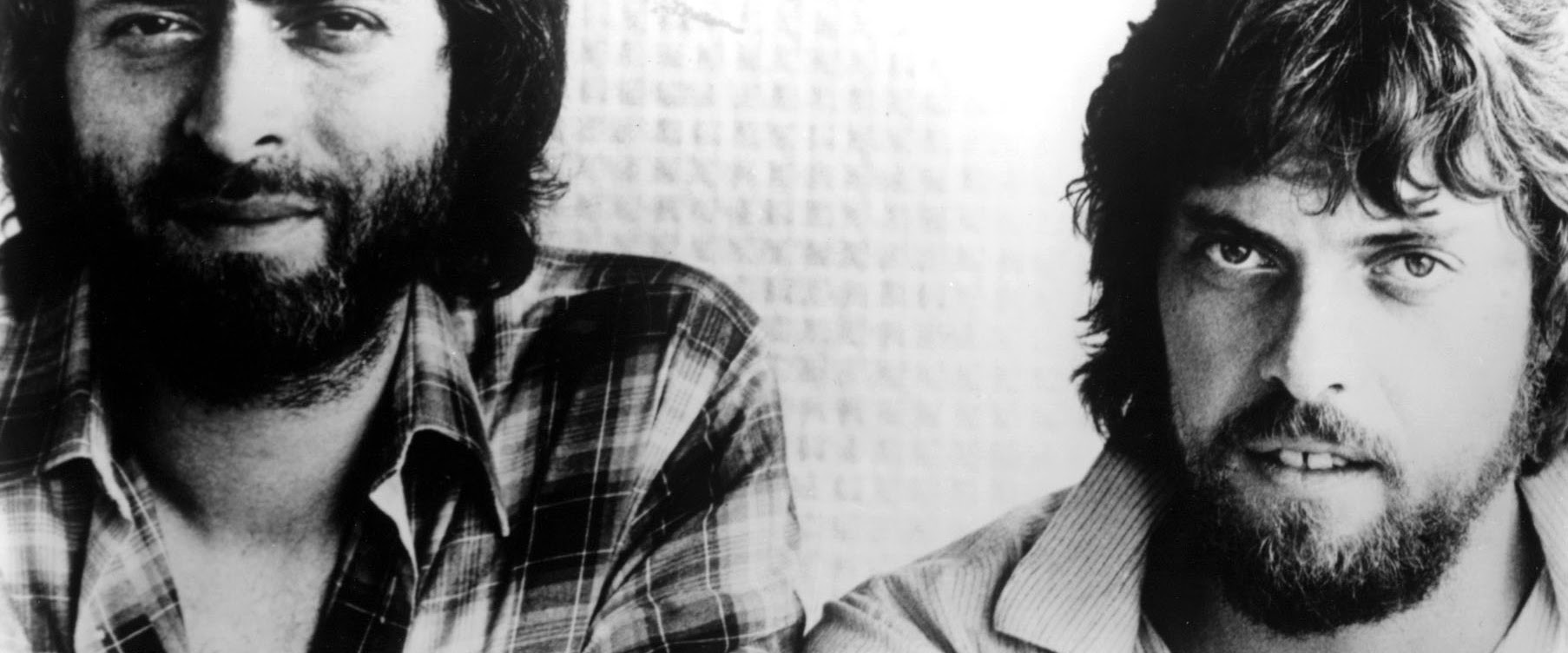
The Alan Parsons Project, from left to right: Eric Woolfson (piano, keyboards, and vocals) and Alan Parsons (main producer, programming, keyboards, and guitar). Image source: YouTube music
Throughout their 15 year-long career, Alan Parsons also worked as a main producer on their records, sharing credits with his bandmate Eric Woolfson on many songs. Their discography includes meaningful, introspective, and captivating concept studio albums revolving around literary themes, sci-fi themes, supernatural themes, or sociological themes. For example, their famous studio album titled Eye in the Sky which was released in 1982 (and one of my most favourite classic rock records) revolves around complex themes such as astronomy (i.e. the instrumental song Sirius, the name of a star and the opener of the respective LP, subsequently used on college and sporting arenas across the United States of America), the supernatural/mysticism coupled with romantic love (i.e. the eponymous song, track number 2), or time and age (i.e. the song Old and Wise).
The literary universe which inspired the British progressive rock duo in crafting some of the most beautiful, elegant, and defining staples of progressive rock over the passage of time include works by Edgar Allan Poe, George Orwell, or Isaac Asimov. The book I Robot by Isaac Asimov inspired the British progressive rock duo to write, record, and release a namesake studio album in 1977. This LP was their second one after their debut studio album titled Tales of Mystery and Imagination released one year earlier in 1976.
Through their elegant and complex song-writing and recording process, Alan Parsons and Eric Woolfson proved to be two very creative gentlemen who also explored romance in their songs, most notably shown in the lyrics of the well-known hit song Eye in the Sky (1982) and Don’t Answer Me (1984). As part of the recording process of their albums, the duo also collaborated with a series of sessions musicians as time passed by.
Aside from production and egineenring, Alan Parsons contributed in regards to programming, composition, keyboards, and guitar while Eric Woolfson was also credited as a song-writer, providing lyrics as well as contributions on piano, keyboards, and vocals while also being an additional executive producer on the duo’s records. In addition, Alan Parsons had experimente with a custom-made musical instrument known as ‘projectron’ which was essentially an analog-sampling keyboard (conceptually similar to a mellotron) that was used on the studio albums I Robot (1977), Pyramid (1978), and The Turn of a Friendly Card (1980).
The British progressive rock duo sold over 55 milion copies of their studio albums worldwide, with the vast majority of their concept studio albums being recorded at the famous Abbey Road Studios in London, United Kingdom. After Alan Parsons and Eric Woolfson parted ways in 1990, Alan Parsons continues to perform as the Alan Parsons Live Project. In total, the British progressive rock duo formed in London released 12 studio albums, 23 compilations, 38 singles, and 9 music videos. Their studio albums are the following ones (listed in chronological order):
- Tales of Mystery and Imagination (1976), inspired by Edgar Allan Poe
- I Robot (1977), inspired by Isaac Asimov
- Pyramid (1978)
- Eve (1979)
- The Turn of a Friendly Card (1980)
- Eye in the Sky (1982), partly inspired by the civilisation and mythology of ancient Egypt
- Amonia Avenue (1984)
- Vulture Culture (1985)
- Stereotomy (1985)
- Gaudi (1987)
- The Sicilian Defence (2014)
On a personal note, I’ve been listening to their great music for quite a while now and their musical genius captivated me for years and years. Their music stayed with me through both my good times and bad times, but it has been especially comforting throughout my bad times. Below you can listen to my personal selection of favourite songs from their discography. I truly hope you will like their music as it is well worth listening to. All the best!
Documentation sources and external links:
- The duo’s Wikipedia page on www.wikipedia.org (in Romanian; an article in which I also contributed in the past)
- The duo’s Wikipedia page on www.wikipedia.org (in English)
- The duo’s discography on www.wikipedia.org (in English)
- The duo’s official website, about page on www.the-alan-parsons-project.com
- The duo’s profile page on www.discogs.com
- The duo’s profile page on www.spotify.com
- The duo’s profile page on www.last.fm
- The duo’s YouTube channel on www.youtube.com
- The music of the duo on www.music.youtube.com
- The Genius of Alan Parsons As Told By Abbey Road’s Cameron Colbeck on www.abbeyroad.com