
Led Zeppelin were one of the most popular and legendary British classic rock and hard rock bands of the late 1960s and 1970s whose musical legacy innovated and continues to inspire numerous generations of both fans and aspiring musicians to this day (and will continue to do so well beyond as well). They started out in 1968, formed as a supergroup under the de fact leadership of guitarist extraordinaire James ‘Jimmy’ Patrick Page (also affectionately known as Pagey), a veteran session musician in 1960s London, alongside bassist and keyboardist (actually a highly talented and technical multi-instrumentalist and equally a veteran session musician) John Paul Jones (the stage name of John Richard Baldwin, also affectionately known as Jonesy), lead vocalist Robert Plant (also affectionately known as Planty, Bobby, the Golden God, or Percy), and drummer John Bonham (also affectionately known as Bonzo). During the next 12 years, this legendary band would not only co-define what classic rock was about (alongside other major British and American rock bands of the 1970s, of course) but also co-pioneer what became known as heavy metal (alongside Iron Butterfly, Steppenwolf, or Black Sabbath for example) and expanded the horizons of what rock music could sound like.
History (1968–1980)
Because they initially twisted the blues and turned it upside down (to quote what Planty himself stated in an interview), they weren’t quite understood or well met by the critics or a part of the British audience during the early 1960s. In essence, what they initially did was to make the blues more electric in their own image (which some people liked and… others not so much; the critics didn’t quite get that initially and it is quite likely that some other people perceived what they were doing as bad taste). Nonetheless, this did not prevent them from pushing the boundaries of what rock music was about. Their first two records, Led Zeppelin I (1969) and Led Zeppelin II (1969) earned them fame and kickstarted their journey towards global stardom. It was around this time (well, actually one year earlier in 1968) that they also did a tour of Scandinavia, starting out in Denmark (where they still have a solid fan base, as it can also be seen in Aalborg, if you ever go to Big Tone Music Shop which used to be my kind of place there during the late 2010s when I was still an international student at Aalborg University or AAU for short; they have a nice poster with Led Zeppelin back in one of the rooms of the shop so you should better check that out as well) and then going north to Sweden and Norway. The informative video made by JCM Rock and Roll Stories & More on YouTube details the history of Led Zeppelin’s 1968 Scandinavian tour:
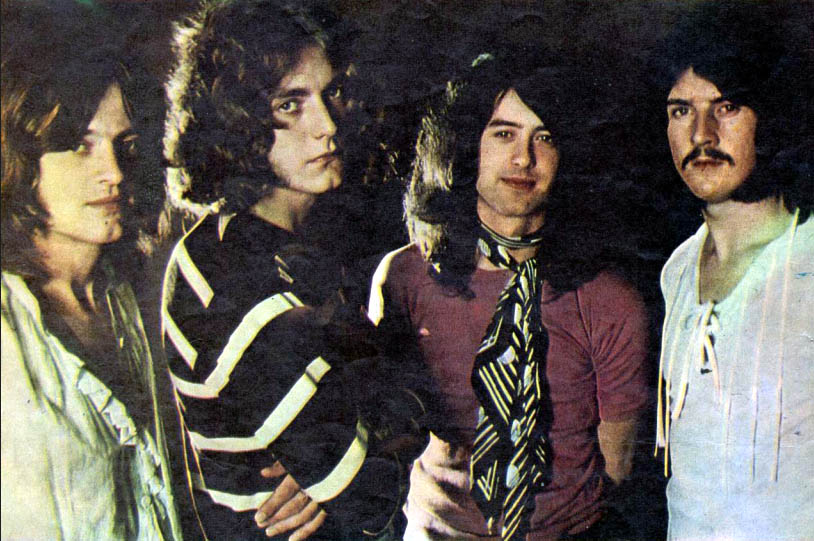
The legendary classic rock band Led Zeppelin in 1971, photograph taken from Pelo magazine. From left to right: John Paul Jones (electric bass guitar, keyboards), Robert Plant (lead vocals, occasionally harmonic), Jimmy Page (electric and acoustic guitars, theremin), John Bonham (drums and percussion). Image source: Wikimedia Commons
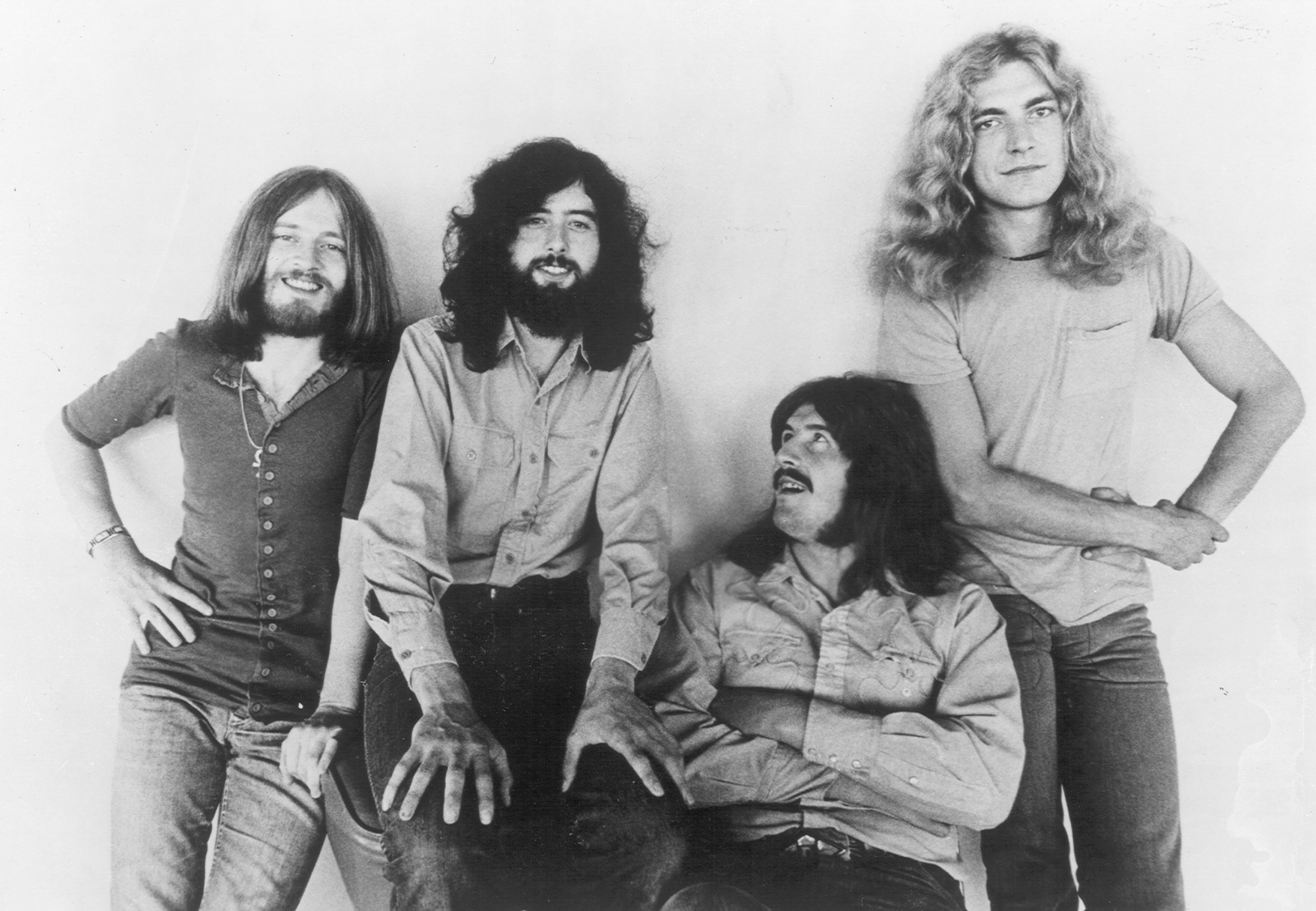
Led Zeppelin in 1971, from left to right: John Paul Jones, Jimmy Page, John Bonham, and Robert Plant. Image source: Cash Box magazine, Atlantic Records (Photo by Michael Ochs Archives/Getty Images via Wikimedia Commons)
Afterwards. the band needed a little bit of rest and that’s how Led Zeppelin III came about, composed at the charming and picturesque Bron-yr-Aur cottage in the heart of beautiful Wales. This was a good opportunity for Robert Plant and Jimmy Page to get to know one another as well. Many of their fans (as well as some critics) expected a new released in the style of Whole Lotta Love, but, instead, the band did something different this time, namely a folk-tinted LP (which has been very dear to me for many years and will continue to be as such).
After Led Zeppelin III, the band was met with a lukewarm overall feedback on behalf of the critics which prompted them to release the iconic Untitled studio album (also known as Runes, the Fourth Album, or, simply, Led Zeppelin IV). This particular studio album literally made history, featuring some of their most popular songs such as Stairway to Heaven, Black Dog, or When the Levee Breaks.
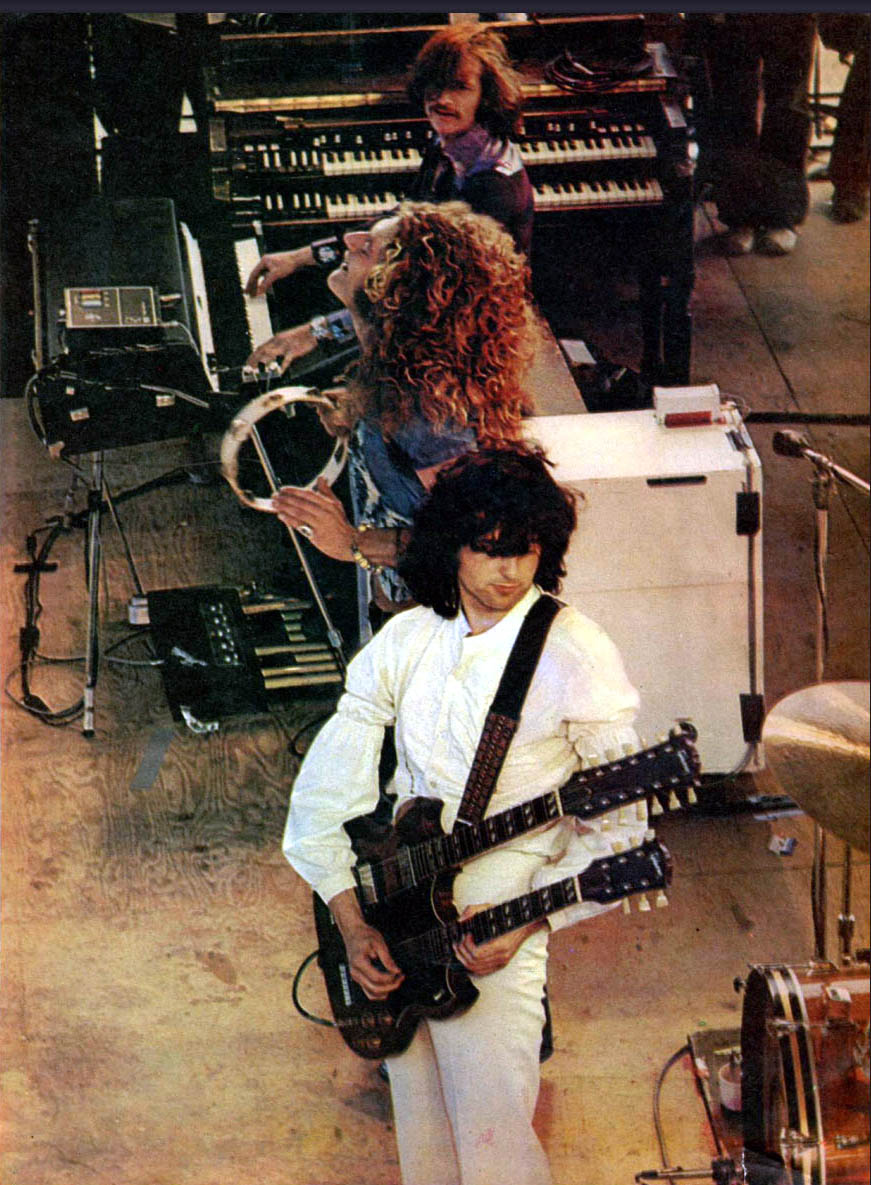
Led Zeppelin performing live in 1975, photograph taken from Pelo magazine. image source: Wikimedia Commons
Their career went on during the 1970s, being at the crossroads of excesses, musical prowess, and various controversies (including spiritual ones), until tragedy struck: John Bonham, the band’s drummer, died at the age of only 32 in 1980. After Bonzo’s death, Led Zeppelin was no more given the fact that the great drummer couldn’t have been replaced by anyone (or almost anyone apart from his great son, Jason Bonham, in 2007 during the reunion of the band that took place at the O2 Arena in London).
Even though this legendary English/British classic rock group existed for approximately 12 years, their amazing and commending musical legacy still influences many generations of young fans as well as new rock bands, most notably the cool American hard rock group Greta van Fleet (which I used to listen a lot to during my time in Denmark; as did some of my neighbours as I found out when I was on my way back home in my student dorm room, heh).
The entire studio discography of the band is as follows (listed in chronological order):
- Led Zeppelin I (1969)
- Led Zeppelin II (1969)
- Led Zeppelin III (1970)
- Led Zeppelin IV (1971)
- Houses of the Holy (1973)
- Physical Graffiti (1975)
- Presence (1976)
- In Through The Out Door (1979)
- Coda (1982)
The band also released the concert-film and live album The Song Remains the Same in 1976. The film has several fantasy scenes (which are a bit controversial as well) such as the one in which guitarist Jimmy Page plays the hermit or in which he is seen playing the hurdy-gurdy with red-glowing eyes near Plumpton Place (one of his properties where he used to have a studio back during the 1970s).
Musical, literary, visual, and spiritual influences
The musical influences of the band were classical music, blues, rockabilly, reggae, soul, funk, Celtic music (including traditional Irish music via Bert Jansch of Pentangle), Indian music, Arab music, folk, pop, and latino. With respect to their literary influences, they mainly stemmed from English high fantasy literature, more specifically from the novels of J. R. R. Tolkien. In visual regards, the painting Evening (The Fall of Day) by American painter William Rimmer influenced the logo of Swan Records, a label the band founded as part of their main label Atlantic Records.
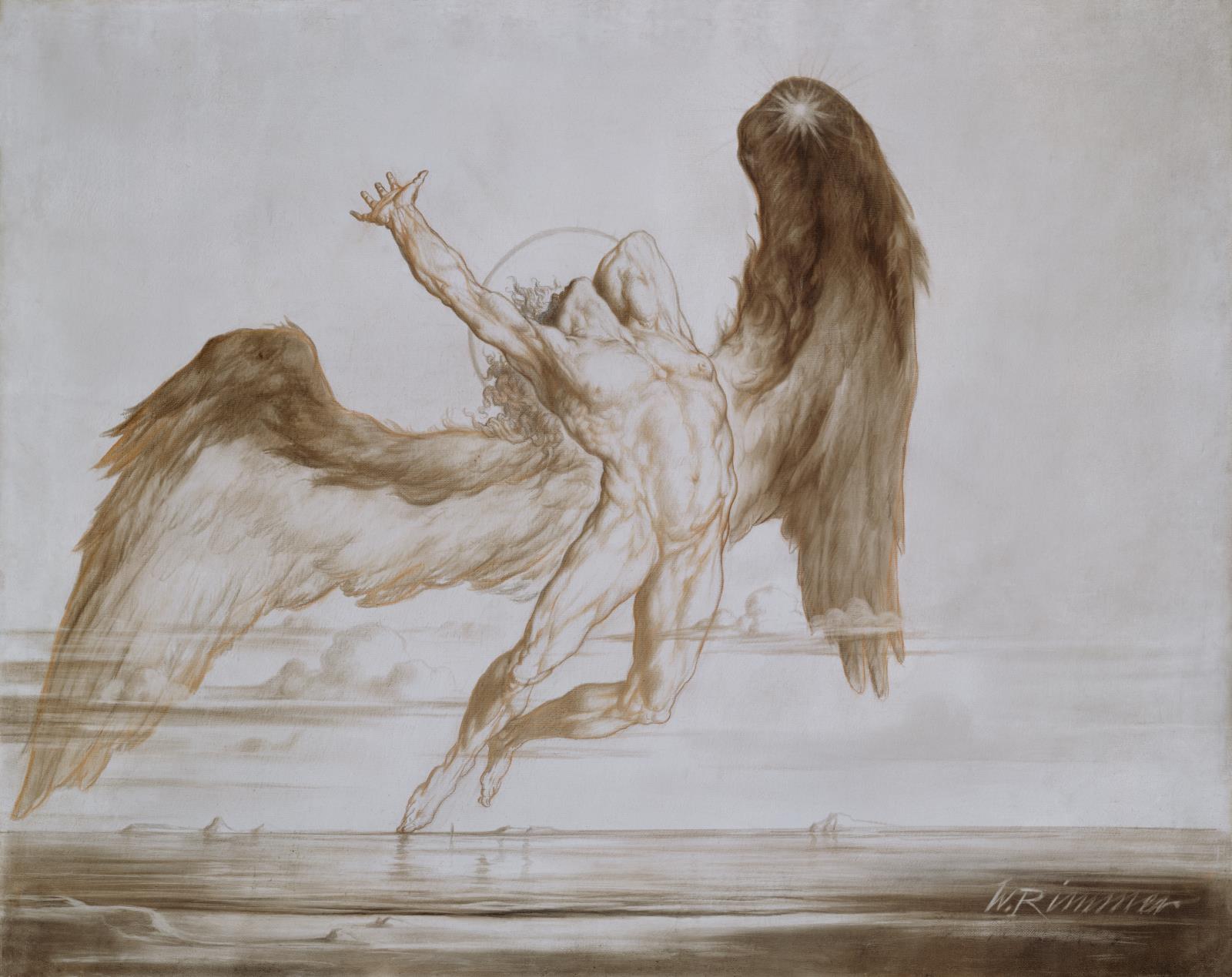
Evening (The Fall of Day) by American painter William Rimmer from 1870 (in the collection of Museum of Fine Arts Boston) via Wikimedia Commons
Other symbols associated with the band are the major arcana tarot card The Hermit (in particular associated with guitarist Jimmy Page) as well as four symbols which appeared on their inner sleeve or cover artwork of Led Zeppelin IV, that is the so-called ZoSo or Zoso symbol (in essence a rather old alchemical symbol for the planet Saturn), the triquetra (associated with bassist and keyboardist John Paul Jones), the Borromean rings (or the Holy Christian Trinity, representing drummer John Bonham), and the ostrich feather of the ancient Egyptian goddess Ma’at (representing lead vocalist Robert Plant). If you are interested to know more about these particular aspects, you can read two of my articles on these matters here and here.

The four symbols of Led Zeppelin via Wikimedia Commons
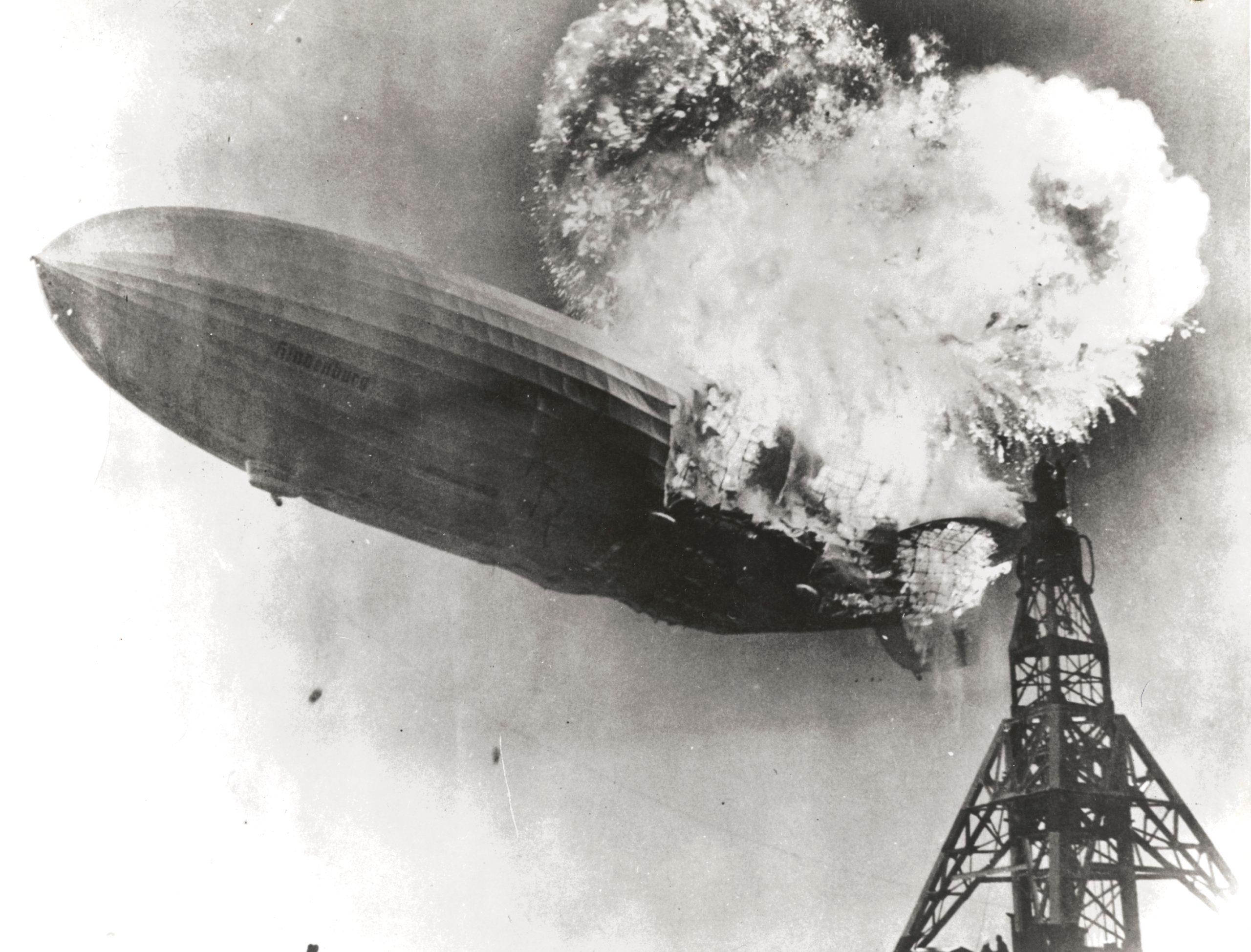
The Zeppelin LZ 129 Hindenburg burning in the air on 6 May, 1937 at Lakehurst Naval Air Station in New Jersey, United States. This photograph inspired the frontal cover artwork of the band’s debut studio album, Led Zeppelin I (released in 1969). Image source: Wikimedia Commons
The band was also influenced by spiritual and mystical themes on the song Kashmir (from Physical Graffiti) for example (lead vocalist Robert Plant wrote the lyrics for the song while driving through the Sahara desert in Morocco back in 1973). The song is a spiritual journey inspired by the experience Robert had during 1973 (and not by the geographic region Kashmir in Asia). On Immigrant Song (from Led Zeppelin III), the band was influenced by Norse mythology. Below is a nice video from the YouTube channel Neil Ratner Rock Doc – Real Rock’N’Roll Stories on the story of Kashmir, one of the band’s most popular songs:
Reunions
After the tragic death of virutoso drummer John Bonham, the band had several one-off reunions in the following years: 1985 (for Live Aid), 1988, 1995, and 2007. In 2007, the son of late legendary drummer John Bonham, Jason Bonham (who also played in the band Bonham), played with the three surviving Led Zeppelin members on the O2 Arena in London, England.
Key important facts
- They were one of the best-selling bands in the history of music.
- Their commercial success was also thanks to their very skilled manager, Peter Grant.
- They were one of the most popular bands of the late 1960s and 1970s.
- They were one of the influential rock bands of all time (their musical legacy still being an inspiration to this day).
- Terry Reid was the initial choice of guitarist Jimmy Page for the role of lead vocalist in the band, but Reid turned down the offer and instead recommended a then unknown (or very underground, niche-based) Robert Plant.
- The name of the band was inspired by the words of the legendary drummer Keith Moon of The Who.
- Prior to forming Led Zeppelin, virtuoso lead guitarist Jimmy Page previously played in another great English supergroup, more specifically The Yardbirds (from 1966 to 1968). Additionally, Led Zeppelin were initially known as ‘The New Yardbirds’.
Must listen songs
Below is a selection of my favourite songs from their discography which I consider must listen (or staples of their catalogue). I truly hope you will like listening to them as much as I did (and still do, of course). Thank you so much for your time, attention, and readership! It means a lot to me! All the best, take care, stay safe, and rock on! 🙂 🤘
- The band’s page on www.wikipedia.org (in Romanian; an article within which I also contributed throughout the passage of time)
- The band’s page on www.wikipedia.org (in English)
- Jimmy Page on www.wikipedia.org (in Romanian; an article within which I also contributed significantly throughout the passage of time)
- William Rimmer on www.wikipedia.org (in English)
- Hammer of the Gods – The Occult Symbolism of Led Zeppelin by Steven Edward Markham on www.archmdmag.com
- Band of the Week: Led Zeppelin on www.wknc.org
- Zoso: The Mystical and Musical Journey of Jimmy Page on www.licklibrary.com
- The band’s official website on www.ledzeppelin.com