
Coda is the title of the eighth and last studio album (and, at the same time, also a compilation album) released by the legendary British classic rock, hard rock, blues rock, and folk rock band Led Zeppelin in 1982. This studio album (or LP) actually represents a compilation of various songs (some previously rejected outtakes from the recording sessions of, for the most part, the studio album In Through the Out Door released in 1979, others in live format recorded during certain concerts from 1969 and 1970; solely 1970 on the original version of the record, then other songs recorded during 1969 were also released on subsequent versions) recorded during different recording sessions which took place between 1968 and 1981.
Coda was released approximately two years after the tragic death of the legendary band member and drummer John ‘Bonzo’ Bonham, more specifically on 26 November, 1982. The word ‘coda’ (derived from the Latin term ‘cauda’) means ‘tail’ and refers to the ending part of a song. The title of the album is, therefore, quite suggestive and denotes the end of the musical journey of the band which spanned across 12 years, more specifically from 1968 to 1980. It is quite likely that multi-instrumentalist, bassist, and keyboardist John Paul Jones (the stage name of John Baldwin) was the band member who chose the name of the album.
This studio album contains two live covers, more specifically We’re Gonna Groove (the first song on the album) by Ben E. King and I Can’t Quit You Baby by Willie Dixon. In 2015, a remastered version of the album was released, containing two more discs of material. The cover artwork for the album was designed by the English art design group Hipgnosis (who also worked with the legendary English psychedelic and progressive rock band Pink Floyd).
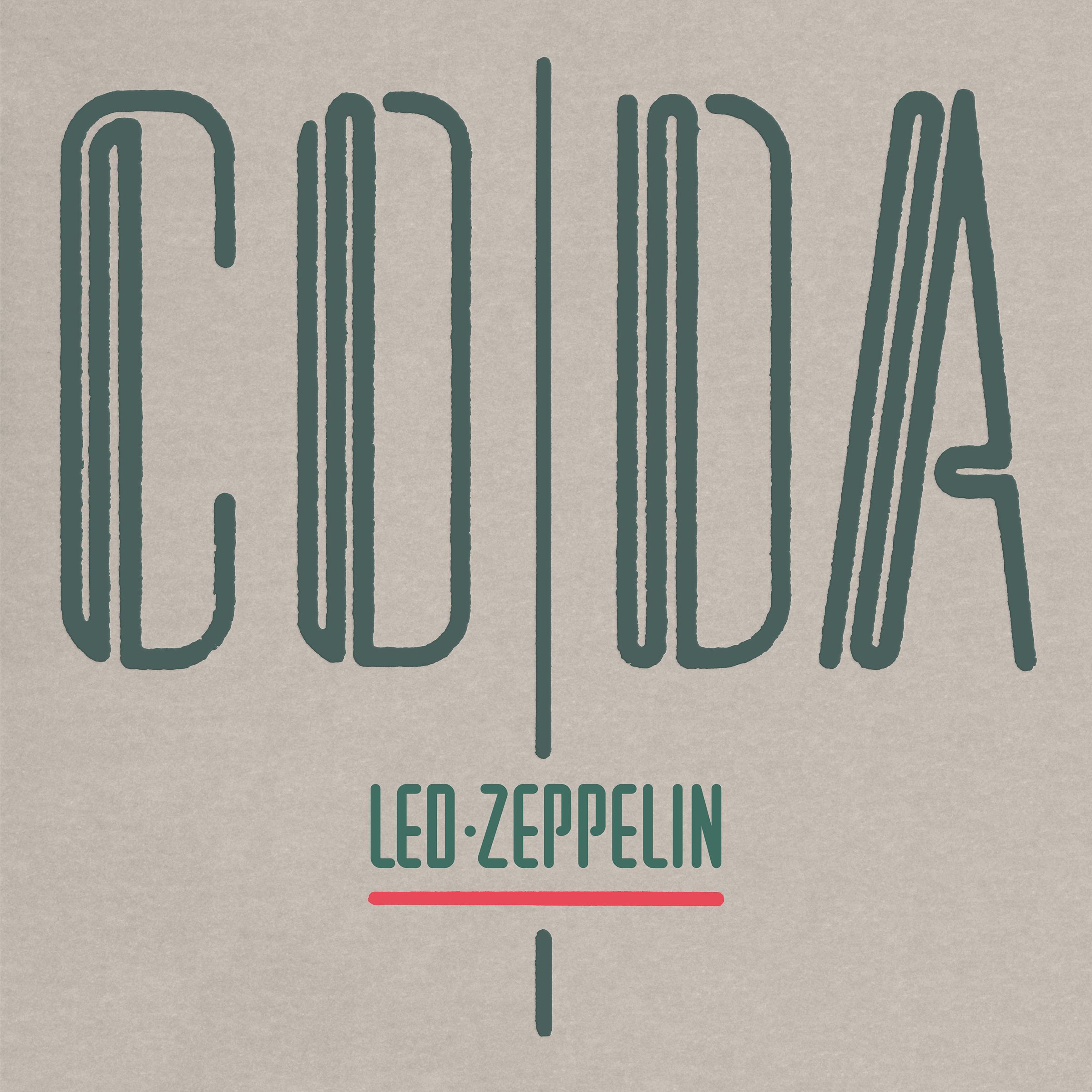
The frontal cover artwork of Led Zeppelin’s eighth and last studio album entitled Coda and released in 1982. Image source: Wikimedia Commons
Led Zeppelin – Coda (1982), back cover of the reissued version of the album. Image source: Wikimedia Commons
The album is a mixture of hard rock, heavy metal, blues rock, and folk rock. It has a total length of 32 minutes and 59 seconds and was released through Swan Song Records. It was produced by the band’s guitarist, Jimmy Page, in collaboration with the band’s manager, Peter Grant. The album produced three singles, namely: Darlene, Ozone Baby, and Poor Tom (all three of them released in 1982). The tracklist of the studio album is as follows:
- We’re Gonna Groove
- Poor Tom
- I Can’t Quit You Baby
- Walter’s Walk
- Ozone Baby
- Darlene
- Bonzo’s Montreux
- Wearing and Tearing
In terms of the recording personnel, the band consisted of the following four members with the following credits/contributions on the following musical instruments:
- Robert Plant – lead vocals and harmonica
- James ‘Jimmy’ Patrick Page – acoustic and electric guitars as well as electronic effects
- John Paul Jones – bass guitar, piano, and keyboards
- John ‘Bonzo’ Bonzo – drums and percussion
In terms of critical reception, the album was fairly well met by the critics, with marks (or stars) ranging from 3.5 out of 5 by AllMusic to 3 out of 5 by The Daily Telegraph or 4 out of 5 by Rolling Stone magazine. Rolling Stone magazine gave the same amount of stars to the 2015 remastered edition as well. In commercial regards, the album sold quite well, managing to obtain a Silver certification in the United Kingdom awarded by the British Phonographic Industry (selling at least 60,000 copies there) and a Platinum certification awarded by the Recording Industry Association of America (RIAA) in the United States of America (selling at least 1 million copies there). The album charted well in the US Billboard 200 or UK Albums (Official Charts) as well as in Australia, Canada, Finland, West Germany, Japan, New Zealand, or Norway.
In 1993 and 2008, other editions of the album were released which included several bonus tracks as follows:
- Baby Come On Home
- Travelling Riverside Blues (live version recorded in June, 1969)
- White Summer/Black Mountain Side (live version recorded in June, 1969)
- Hey, Hey, What Can I Do (originally released as a B-side of the Immigrant Song single in 1970)
You can listen to the original version of the entire studio album/compilation, embedded song by song via YouTube, below:
Documentation sources and external links:
- Coda (album) on www.wikipedia.org (in Romanian; an article within which I also contributed a bit throughout the passage of time)
- Coda: essential element of classical music on www.yousician.com
- How Led Zeppelin Fulfilled a Quest for One Final Set of Songs, article by Michael Gallucci published on 19 November, 2015 on www.ultimateclassicrock.com (Ultimate Classic Rock Magazine)
- 40 years of ‘Coda’, the Led Zeppelin finale, article by Tyler Golsen published on 19 November, 2022 on www.faroutmagazine.co.uk (Far Out Magazine)