
Led Zeppelin I is a legendary classic rock and blues rock studio album released by the English rock supergroup Led Zeppelin in 1969. It is the band’s debut studio album and was recorded between September and October, 1968 (the year in which the group was formed) at Olympic Studios in London, England, United Kingdom. It was officially released in January, 1969 in the United States of America (USA) and in March of the same year in the United Kingdom of Great Britain and Northern Ireland (UK) through Atlantic Records, the record label with which the band was affiliated. It has a total length of 44 minutes and 45 seconds and is a complex mixture of hard rock, heavy metal, blues rock, psychedelic rock, and folk rock. It was produced by the band’s guitarist Jimmy Page (who also played on the theremin and mandolin later on). The LP (i.e. long play) produced one single, more specifically Good Times Bad Times / Communication Breakdown which was released on 10 March, 1969.
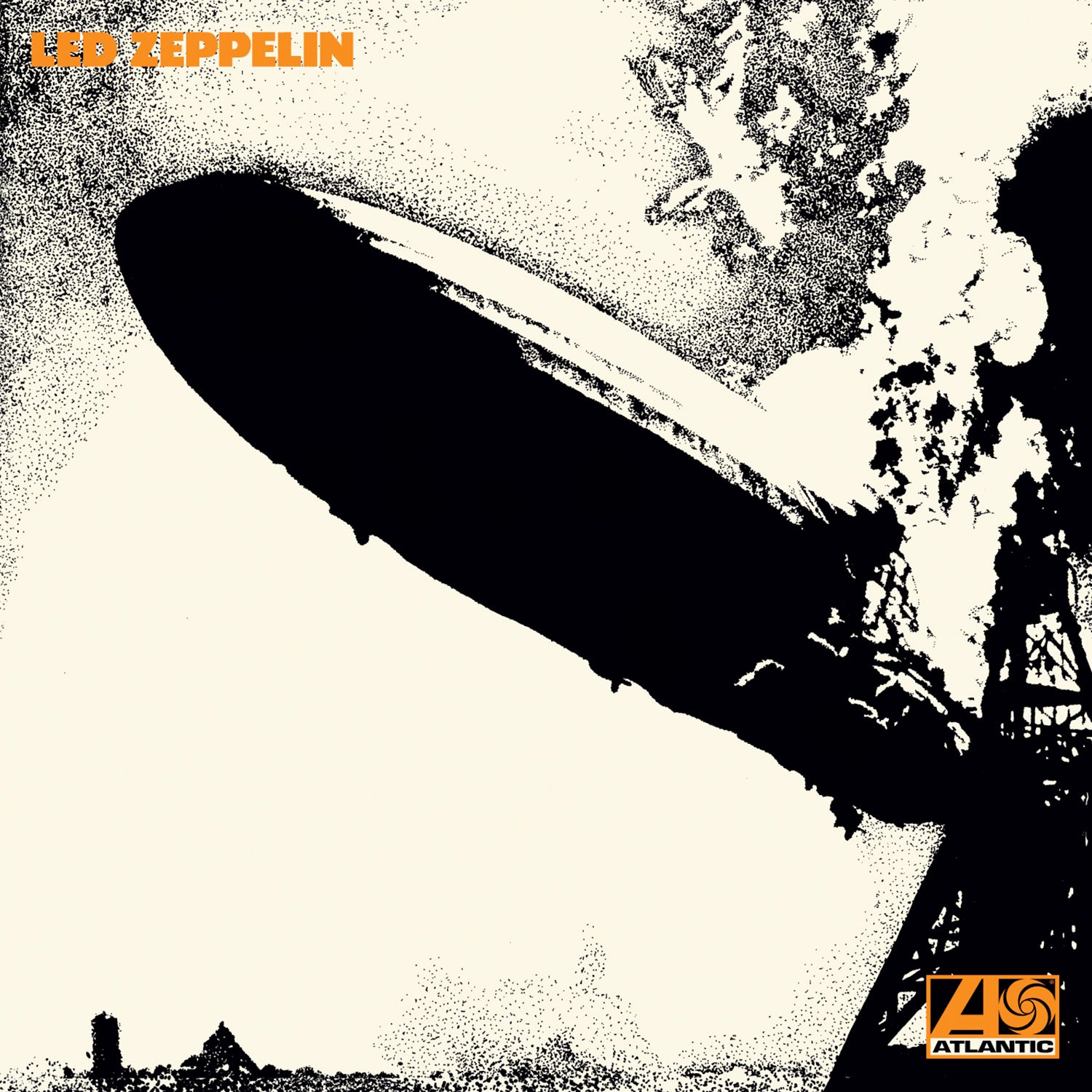
The frontal cover artwork of Led Zeppelin (1969), designed by George Hardie and inspired by the tragedy of the Hindenburg German zeppelin which caught fire at Lakehurst Naval Air Station in New Jersey, United States in 1937. Image source: Wikimedia Commons
From a stylistic point of view, the album contains both original material recorded by the band as well as rearrangements (covers or remakes) of other songs, particularly inspired by the legendary Scottish guitarist Bert Jansch of Pentangle (namely Blackwaterside, also known as Down by Blackwaterside, a traditional Irish song, from his solo studio album Jack Orion released in 1966 which became Black Mountain Side on this record). The band had 36 hours at their disposal according to their contract to finish the album, being paid for their musical activity directly by de facto band founder and leader Jimmy Page (affectionately known as Pagey) and the band’s manager, Peter Grant (who contributed tremendously to the group’s commercial success). Prior to becoming part of Led Zeppelin, Robert Plant performed in a rather obscure or lesser-known band known as Obs-Tweedle and was very much unfortunately homeless at the time (when I got to know this very sad aspect by watching Becoming Led Zeppelin, a documentary on the band which was released in 2025, this actually broke my heart). On the other hand, Jimmy Page was already well-known and firmly established as a virtuoso guitarist, with a very strong experience as both a session musician for several years and as an important subsequent guitarist in the Yardbirds from 1966 to 1968 (even becoming lead guitarist at a certain point in time in the aforementioned great musical group).
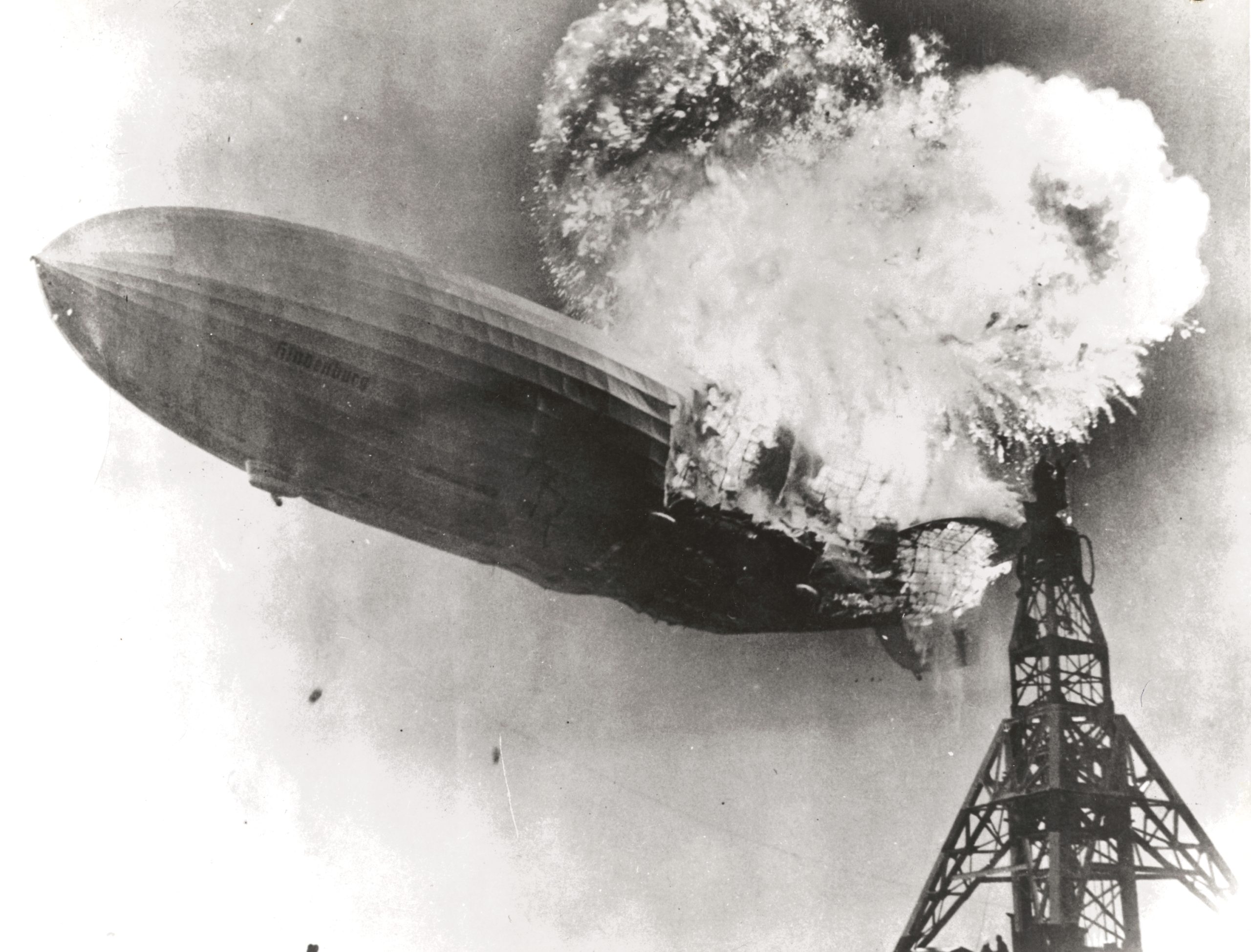
Black and white photograph depicting the disaster which struck the Hindenburg German zeppelin in New Jersey, United States in 1937. Image source: Wikimedia Commons
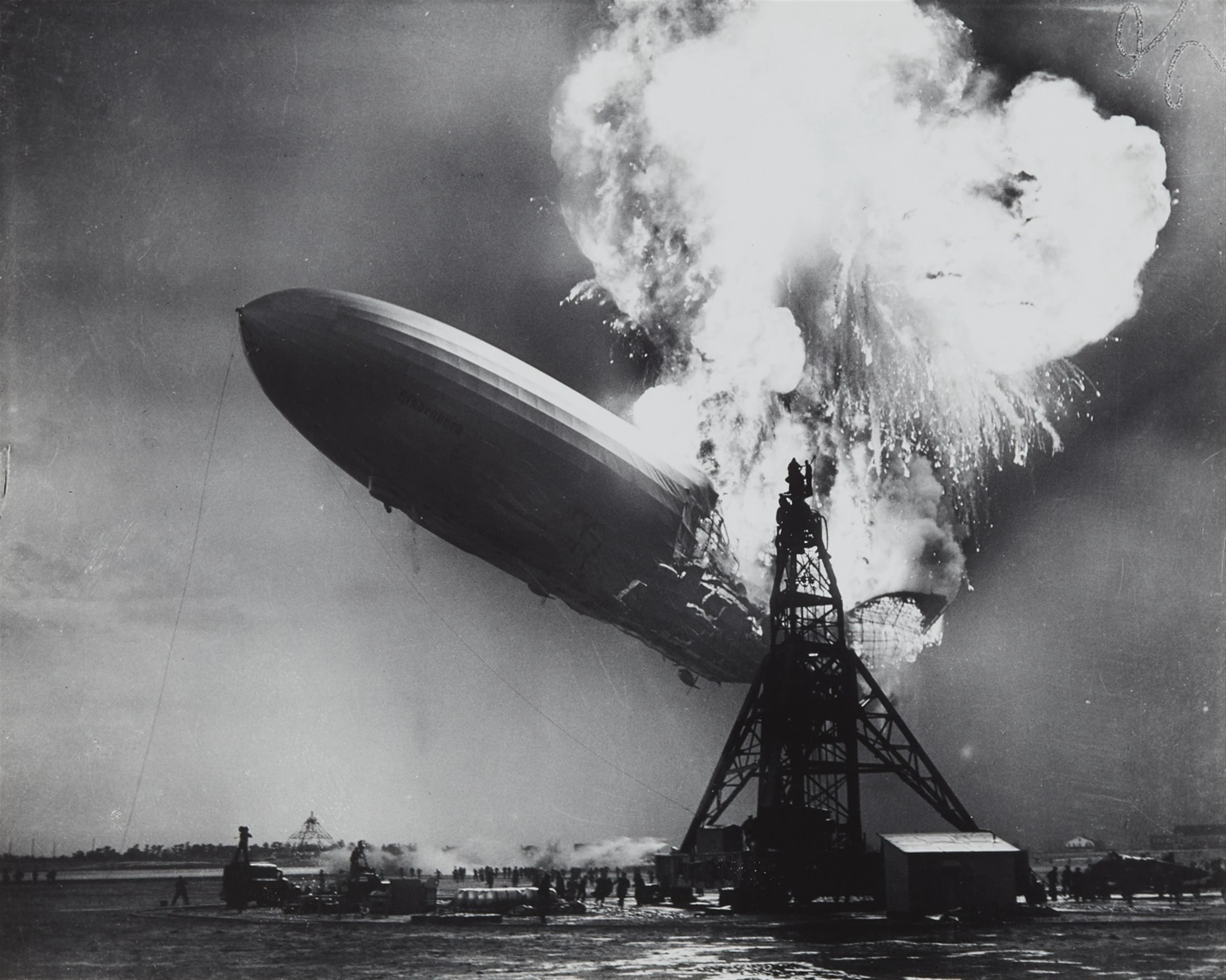
Another black and white photograph of the Hindenburg zeppelin catching fire and in the process of crashing on the soil in New Jersey, United States in 1937. Image source: Wikimedia Commons
The band consisted of 4 very talented and technical musicians, each and every one of them a true master at his craft, namely: Robert Anthony Plant (affectionately known as Planty) on lead vocals and harmonica, multi-instrumentalist John Paul Jones (the stage name of John Richard Baldwin, otherwise affectionately known as Jonesy) on electric bass guitar and organ, a very hard-working veteran session musician in 1960s London who previously collaborated with Jimmy Page on several recording sessions for other artists before joining Led Zeppelin (in other words, a genuine musical force of nature to be reckoned with) as well as drummer and percussionist John Bonham (affectionately known as Bonzo). The recording personnel was completed by very talented and technical Kenyan-born Indian percussionist Viram Jasani (who can also play the sitar) who was a session musician on this record, contributing percussion on tabla, a musical instrument from the Indian subcontinent, on the touching acoustic masterpiece Black Mountain Side.
Glyn John’s, a childhood friend of Jimmy Page, was in charge of mixing all the songs of the album while the frontal cover artwork was designed by visual artist/graphic designer George Hardie. Creatively, the record is quite notable with respect to co-pioneering and popularising both hard rock and heavy metal as sub-genres of rock music. Given the fact that some songs were rather long and therefore not suited for radio play and Jimmy Page’s reluctance in terms of releasing singles from their debut studio album, the band only released one single. Jimmy Page wanted it this way because it was the right way of musical expression of the band as he perceived the group as album-oriented (in stark contrast to being merely single-driven). Nonetheless, throughout the passage of time, the album became more and more popular and so other longer songs from it eventually became a must in the playlists of many rock-based radio stations around the world.
The album consists of two sides, side one with 4 songs while side two totalling 5. The full tracklist is as follows:
Side one
- Good Times Bad Times
- Babe I’m Gonna Leave You
- You Shook Me
- Dazed and Confused
Side two
- Your Time Is Gonna Come
- Black Mountain Side
- Communication Breakdown
- I Can’t Quit You Babe
- How Many More Times
Even though the album’s frontal cover artwork was inspired by the tragedy of the Hindenburg German zeppelin which crashed in New Jersey, United States in 1937, it was a major commercial success which was critically-acclaimed as well, propelling the band to global stardom and setting the stage for an amazing musical journey which would span 12 years up until 1980, the year in which the group’s dear drummer and percussionist John Bonham died tragically, thus putting an end to their musical activity for the most part (aside from several subsequent reunions). Below you can listen to all of the songs of the album embedded via YouTube. Have a great musical audition! Thank you so much for your time, attention, and readership! All the best, take care, stay safe, and rock on! 🙂 🤘
- Led Zeppelin on www.britannica.com (the online version of Encyclopædia Britannica)
- Influential Rock Bands on www.britannica.com (the online version of Encyclopædia Britannica)
- Robert Plant on www.britannica.com (the online version of Encyclopædia Britannica)
- John Bonham on www.britannica.com (the online version of Encyclopædia Britannica)
- Led Zeppelin I on www.wikipedia.org (in English)
- Led Zeppelin I on www.wikipedia.org (in Romanian; an article within which I also contributed throughout the passage of time)
- Becoming Led Zeppelin, a great and informative documentary on the formation of the band which was released in 2025
- Hindenburg disaster on www.wikipedia.org
- LZ 129 Hindenburg on www.wikipedia.org
- Hindenburg-class airship on www.wikipedia.org
- Hindenburg disaster in popular culture on www.wikipedia.org