Just as other classic rock bands of the 1960s and 1970s, Fleetwood Mac had its own literary and mythological influences. As one of the most beloved rock bands in history, their music still has a major touching impact on millions of fans worldwide, leaving an indelible positive mark on the hearts of many generations of fans throughout the passage of time. This brief article will focus on several literary influences of the British-American classic rock band Fleetwood Mac and the correlation these influences have with two of their most popular songs, more specifically Rhiannon (the fourth song on side one of the studio album Fleetwood Mac released in 1975, the first to feature Stevie Nicks and Lindsey Buckingham) as well as Everywhere (taken from the band’s 14th studio album entitled Tango in the Night which was released in 1987). In addition, it is important to mention the first major literary influence which the band had for the last studio album dating back to the Peter Green-led era of the group, more specifically William Shakespeare’s play Twelfth Night for the LP Then Play On (1969). There is a quote in this play which influenced the title of this wonderful musical masterpiece, namely: ‘If music be the food of love, play on.’
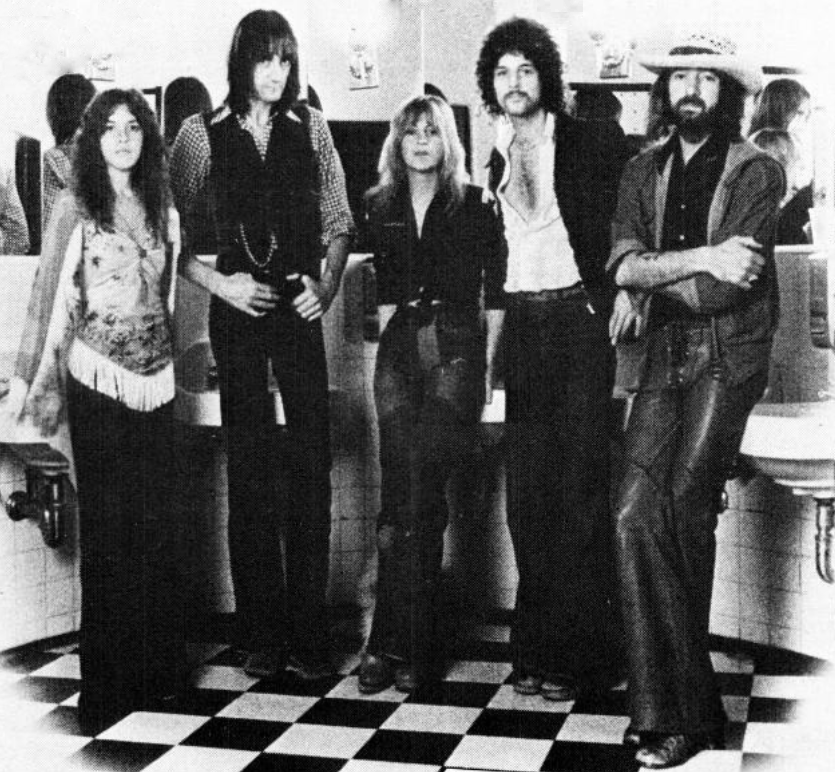
British-American classic rock band Fleetwood Mac in 1975, from left to right: Stevie Nicks (lead vocals), Mick Fleetwood (drums), Christine McVie (keyboards and co-lead vocals), Lindsey Buckingham (electric guitar), and John McVie (bass). Image source: Wikimedia Commons
In the case of the magical song Rhiannon, Stevie Nicks was influenced by the book Triad: A Novel of the Supernatural by Mary Bartlet Leader as well as The Song of Rhiannon by Evangeline Walton and The Mabinogion, a collection of 11 medieval Welsh tales revolving around magic, adventures, and Arthurian romance (compiled during the High Middle Ages, more specifically between the 12th and 13th centuries). Rhiannon is the name of a powerful Celtic goddess of wisdom, fertility, sovereignty, the moon, and horses (alternatively known as the ‘Divine Queen’, ‘Divine Queen of the Fairies’, or ‘Great Queen’ respectively ‘Ringantona’; quite similar to the Gaulish goddess Epona as well as the Irish goddess Macha). Below you can listen to the song embedded via YouTube (both the studio version as well as the music video one):
Documentation sources and external links:
- Fleetwood Mac (1975 album) on www.wikipedia.org
- Rhiannon on www.wikipedia.org
- Rhiannon on www.britannica.com (Encyclopædia Britannica)
- Mythological Girls: Rhiannon on www.girlmuseum.org
- “The Highway Man” – Poem by Alfred Noyes – The Highway Man Music, Analysis, Art and Book on www.supernaturalhippie.com
- Everywhere (Fleetwood Mac song) on www.wikipedia.org
- Everywhere on ww.last.fm
- Everywhere on www.imdb.com
- Tango in the Night on www.wikipedia.org
- The Wiki page of the band on www.no.wikipedia.org (in Norwegian Bokmål, an article within which I also contributed in the past)
- ‘Then Play On’: the turning point album that kept Fleetwood Mac alive, an article by Lauren Hunter on www.faroutmagazine.co.uk
- The Outsize Influence of Wales on Fantasy, Music, and Movies, an article by Anna Fiteni on www.lithub.com
- Behind the Song: Fleetwood Mac, “Rhiannon”, an article by Elizabeth Hollerith on www.americansongwriter.com (American Songwriter)
- “It was if Merlin himself could not have concocted a spell more perfect”: how Stevie Nicks turned to mythology to conjure up Fleetwood Mac’s Rhiannon, an article by Bill DeMain on www.loudersound.com
- The Mabinogi on www.mit.edu
- The timeless magic of The Mabinogion, weird and wonderful Welsh folklore on www.wales.com